Courgette Currency: The Quiet Rules of Chelmsford's Front-Garden Food Tables

Photo: honesty box allotment gate vegetables UK front garden produce table sign, via i.pinimg.com
On a residential street in Moulsham, there is a small wooden table at the end of a garden path with a hand-painted sign that says, in slightly wonky capitals: COURGETTES. PLEASE TAKE. GENUINELY.
It has been there since July. In August it held four marrows and a bag of runner beans. In October it held apples. In early November it held a single, enormous pumpkin with a note attached that said "no, honestly, take it". Nobody organised it. Nobody runs it. It is not on any map, and that is rather the point.
A network held together by string and good intentions
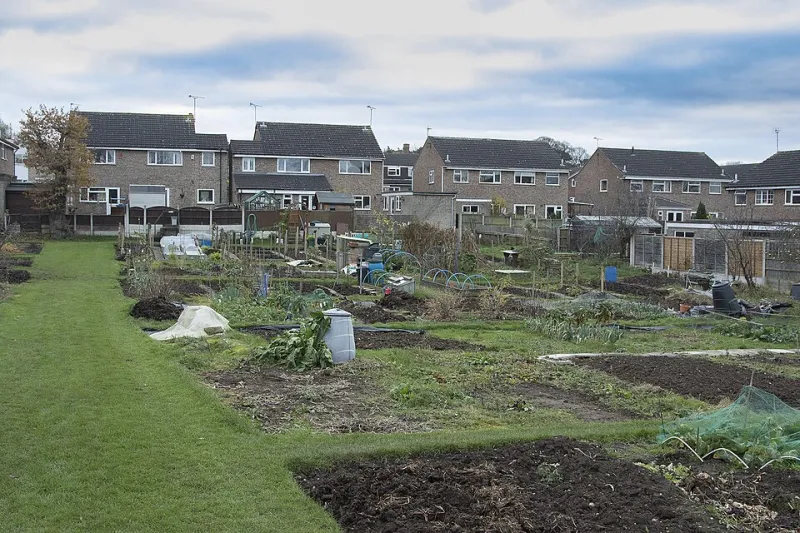
Every growing season, a loose and entirely unofficial food trail appears across Chelmsford. It runs from allotment sites on the edge of the city — Great Baddow, Broomfield, Writtle, the plots behind Springfield — through the front walls and window ledges of the terraced streets, and out to the villages where a crate of plums on a gatepost is simply how things are done.
Some of it is surplus: the moment in late summer when every courgette plant on the planet ripens at once and a household of four can no longer face another fritter. Some of it is deliberate: eggs from a back-garden run, jam made in a preserving pan that got slightly out of hand, seedlings in yoghurt pots in April. Some of it is a swap — a bag of apples left in exchange for a jar of something.
What it isn't is a scheme. There is no directory, no membership, no annual general meeting. That is not a gap that needs filling. It's the reason it works.
What turns up, and when
If you want to know what to look for on a walk around your neighbourhood, the calendar is fairly reliable:
- April to May: seedlings, spare tomato plants, rhubarb, and the first of the salad leaves.
- June: strawberries, broad beans, and the first ominous hints of what's coming.
- July to August: the glut. Courgettes, runner beans, cucumbers, tomatoes by the bowlful, and the annual game of leaving them on a table rather than a neighbour's doorstep because the neighbour has started locking the gate.
- September to October: apples, pears, plums, the last of the beans, and the first pumpkins — which are cheerful for a fortnight and then a problem.
- November to December: sprouts, leeks, the tail end of the squash, and the occasional jar of chutney.
If a table has been empty for a week, don't assume it's finished — the sign is usually still there, and fresh things turn up when the garden decides.
The etiquette nobody wrote down
There is no rulebook, which means the rules are learnt by watching. Roughly:
Take what you'll actually use. A bag of beans feeds a family; a car boot full of them feeds a composting bin. Nobody is counting, but everyone notices.
Close the lid, weigh down the box, and don't rearrange the display. If it's raining, the note in the sandwich bag is there for a reason.
If there's a tin, put money in the tin — not in your pocket. Honesty boxes on allotment gates are the backbone of this whole thing. Fifty pence for a punnet of tomatoes, a pound for a jar of jam. Unlike a shop, there's no one to catch you. That's the entire arrangement.
Leave something if you've taken the last one. It doesn't have to be food. A note, a spare carrier bag, a few seeds from your own garden.
Don't photograph the house. A picture of the sign is charming. A picture of someone's front door, gate and number plate in a local Facebook group is not.
Respect the ones that aren't for you. There are tables with a small sign reading "for the food bank" or "allotment members only". They are still generous. They are just not for passers-by.
The honesty bit, and why it's still working
Honesty boxes survive because most people are decent and because the sums involved are small enough that cheating feels petty even to the petty. Several Chelmsford allotment sites have had the same faded ice-cream tub with a slot cut in the lid for years. Some have gone upmarket with a QR code taped to a Tupperware box, which somehow defeats the romance slightly but works fine.
If you're setting one up, the practical version: a lidded tub, a slot, a note with prices, something heavy on top, and a padlock on the tin if you're feeling cautious. Then relax. If it gets robbed once in five years, you're still ahead.
Food safety, without the clipboard
The etiquette is unwritten but the common sense is worth stating plainly.
Wash everything. Salad leaves, fruit and veg from a front garden have been outdoors, near a road, and possibly handled by a stranger — a rinse solves nearly all of it.
Be cautious with anything that isn't a raw, whole fruit or vegetable. Jam and chutney from a labelled jar are usually fine; a bowl of unrefrigerated rice salad on a wall in August is not. Home-laid eggs should be clean and uncracked, and ideally labelled with a date.
Don't take cooked food from a table with no name and no date on it, however well-meant. And if you're the one leaving food out, keep it in the shade, keep it covered, and take it in at the end of the day rather than leaving it out overnight.
That's it. There is no certificate to earn.
How to join in
Start small and start badly. A crate on the wall, a hand-painted sign, a bag of whatever has overrun the garden this week. Put a date on it if you're leaving anything perishable, and a first name if you'd like people to knock and say thanks.
If nothing appears on your table for a fortnight, don't conclude that your neighbourhood is unfriendly. Conclude that it's November, and wait for the rhubarb.