Cork, Pins and Blu-Tack: A Field Guide to Chelmsford's Community Noticeboards
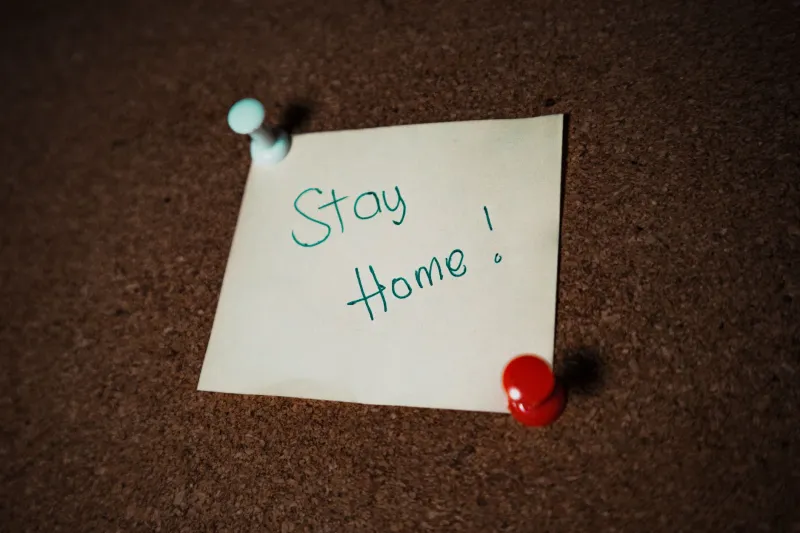
Somewhere past the self-service tills and before the doors swing open onto the car park, there's a cork board doing a job that no app has quite replaced. It's covered in curling A5 flyers, a hand-written card advertising a coffee morning, and one lonely tear-off strip fluttering at the bottom like a loose tooth. It is, in its quiet way, one of the most honest noticeboards in Chelmsford.
This isn't a nostalgia piece. Plenty of us use group chats, and plenty of us still slow down at the board on the way past. What follows is a wander through the boards of the town as 2026 heads towards its close — where they live, how to read them, and how to add your own notice without becoming the person everyone quietly sighs about.
The boards that are still standing
Chelmsford's noticeboards fall into a few loose tribes. There are the civic ones: the glass-fronted cases outside the library, the parish boards near Chelmsford Cathedral, and the ones tucked beside village halls out at Writtle, Great Baddow and Broomfield. These tend to be tidy, managed and slightly formal — the sort of board where a note about a road closure sits next to a poster for a summer fete that happened in July.
Then there are the commercial ones. Café boards, the notice strips by the tills in the bigger supermarkets, the cork panels in a leisure centre foyer. These are the chaotic ones, and honestly the most interesting. Here you'll find a piano looking for a home, a badminton partner wanted, a bike that's been "found" and is "definitely not stolen, we just want it to go to the right person", plus at least one notice three years old and gone the colour of weak tea.
And then there are the unofficial ones — the A4 taped inside a bus shelter, the laminated card cable-tied to a lamp post near a park, the sheet in a window on Moulsham Street. Technically these live in a grey area; in practice, they're how half of Chelmsford finds out about a jumble sale.
How to read between the pins
A noticeboard is a palimpsest — a word borrowed from a historian friend, meaning you can see the layers. Look closely and you can date a board by its strata. The bottom layer is a solid crust of events that have been and gone. Above it, a middle band of things that might still be happening. Right at the top, crisp and uncurled, are the notices pinned this week.
Three things are worth checking before you trust anything you read there:
- The date. A surprising number of posters say only "Saturday" and nothing else. If there's no year, assume it's expired until proven otherwise, and ring the number.
- The corners. Curled corners mean damp, sun and time. A crisp corner is a fresh notice; a corner held down with four drawing pins and a bulldog clip is a survivor, possibly of several winters.
- The tabs. Those tear-off phone-number strips along the bottom are the best honest signal on any board. If all the tabs are gone, the notice is popular. If every tab remains and it's been up since August, it isn't.
Where the good ones are
Ask five Chelmsford residents where the best noticeboard is and you'll get five answers. Parents tend to point at the school gate boards and the ones in the library children's section, where a swimming club, a drama group and a lost water bottle all share the same square of cork. Older residents often rate the church hall boards — at the Cathedral and in the parish churches around Springfield and Chelmer Village — because they get cleared regularly and the handwriting is legible.
The supermarket foyer boards are the ones people read while waiting for a click-and-collect. They're where you find the practical stuff: a mobile hairdresser, someone who mends garden gates, a slimming group restarting in January, a hedgehog rescue asking for old towels. Also, reliably, a cat.
What makes a notice actually work
If you've ever pinned something up and watched it sink without trace, here's the short version of what the good ones do:
- Lead with the what, not the who. "Coffee morning, Tuesday 24 November, 10am–12pm, £2" beats a paragraph about the committee.
- Make the phone number readable from a metre away. Big digits, spaced out — 07700 900 123, not a squashed line in 8pt.
- Put the date in full, year included. "Sat 5 Dec 2026" removes all doubt.
- One message per notice. If you're advertising a quiz night, a raffle and a call for volunteers, that's three notices or nothing.
- Add tear-off tabs, even if you're not sure anyone will take one. People take them.
- Keep it A5 or A4. Anything bigger gets folded, covered or quietly removed by whoever manages the board.
The etiquette of the pin
This is where community boards live or die. The unwritten rules are simple: don't cover someone else's notice, don't use six pins when one will do, and — the one that really matters — take your notice down when it's over. The biggest complaint about Chelmsford's boards isn't vandalism or clutter. It's the fete poster still sitting there in November, quietly eroding everyone's trust in the whole system.
If a board is behind glass and locked, it's managed by someone. Ask at the desk. Nine times out of ten the answer is a cheerful yes, sometimes with a stapler. If the board is in a café, buy something first. Nobody enforces that; it's just decent.
If you've got something to say
Posting your own notice in 2026 is still one of the cheapest bits of publicity going. Print it at home, or use the printer at the library. Write the date in full, put the most important word at the top, and set your number at a size a person can read while holding a shopping bag. Then pin it straight, and photograph it so you can reprint it next time.
And when it's done — when the coffee morning has happened, when the cat has come home, when the bike has found its person — go back and take it down. That small act of tidying is what keeps the boards worth reading. Everything else is just cork.