When the Town Goes Quiet: Helping Chelmsford Children Make Sense of Remembrance Sunday
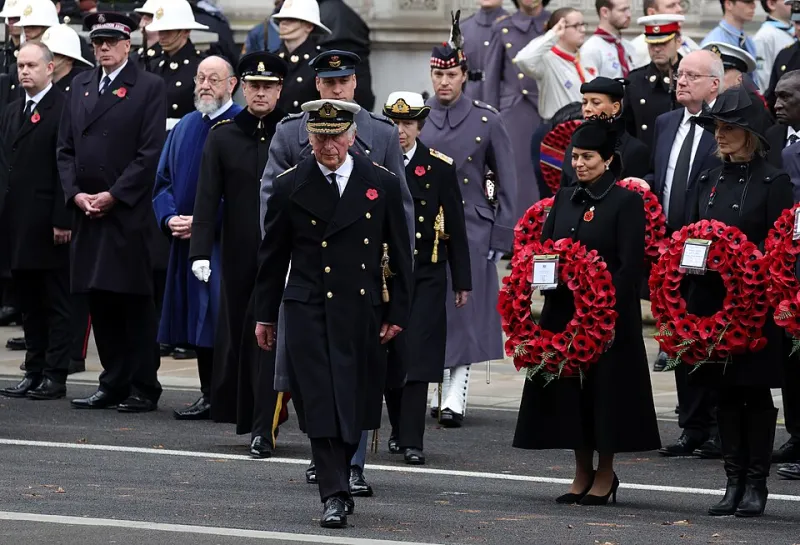
Photo: Number 10, CC BY 2.0, via Wikimedia Commons
Today is Remembrance Sunday, 8 November 2026. At 11am, Chelmsford will go quiet. For many families, this is the first year a child has asked to come along to the civic events in the city centre rather than staying at home with a grandparent. For others, it is a long-standing ritual: warm coats, a poppy pinned on, and a slow walk towards the War Memorial in Duke Street. This guide is for anyone navigating the morning with young people in tow — not a military history lesson, just a neighbourly hand with the practical bits.
Before You Leave the House
Check the Chelmsford City Council events page and your school newsletter before you travel. Road closures and timings can shift, and the civic parade through the city centre is busy. If you are meeting friends, pick a clear landmark — the cathedral steps, a shop doorway, the corner of Duke Street — rather than “near the memorial”. Crowds fill in quickly.
Talk to children about what will happen before you arrive. Keep it short: people will walk, a band may play, there will be wreaths, and at 11am everyone will stand still and be quiet for two minutes. If your child is sensitive to noise, bring ear defenders. If they are sensitive to crowds, stand at the back. There is no rule that says you must be in the front row to take part properly.
Where to Stand, and Where Not To
The War Memorial area in Duke Street is the focal point, and the cathedral is nearby for the civic service. You do not need to be inside either to feel part of the morning. Standing back from the parade route is often kinder for families: you can see the colours and hear the music without being pressed against a barrier.
Keep pushchairs and bags out of the main walking lines. If a marshal asks you to move, do so without taking it personally — they are trying to keep a slow-moving parade and a lot of people safe. And unless you are laying a wreath, avoid crossing the memorial area itself. It is not a shortcut. Explain to children that people have come to stand near it, lay flowers, or remember someone specific. That makes the “why can’t I climb on it?” question much easier to answer.
What to Bring
Think layers, not fashion. November mornings in Chelmsford can be bright and bitter at the same time. Gloves, a warm coat, and comfortable shoes are more useful than anything fancy. Bring a snack and a drink for younger children, and a tissue or two. Poppies can be fiddly; pin them securely or use a paper poppy with a safety pin at the back. If your child has a school poppy or a craft poppy, that is fine too.
A phone is useful for meeting up, but keep it out of your hand during the silence. Children notice what we model. If you are taking photos, do it before or after the act of remembrance, not while people are gathered in quiet.
Explaining the Silence
The two-minute silence is the part children often remember most. Keep the explanation gentle and concrete: “For two minutes, people all over the country stop to remember people who died in wars. We also think about people who are still affected by conflict, and about wanting peace.”
Avoid saying “we are celebrating war”. Remembrance is not a celebration of fighting. It is a public act of memory. If your child asks why people wear poppies, explain that the red poppy grew on the battlefields of the First World War and became a symbol of remembrance. If they ask about white or purple poppies, you can say that different people choose different symbols: red for remembrance, purple for animals affected by conflict, white for peace. They do not need a full history of every symbol on the way to the memorial.
During the silence, stand still if you can. If a toddler wriggles or a baby cries, that is normal. Move to the edge, settle them, and come back if you can. Nobody is grading you.
When the Questions Come Afterwards
This is where the morning does its real work. Children often ask big questions on the walk back to the car or over a hot chocolate. Try not to brush them off with “it’s complicated”. You can say, “It is complicated, and I am still learning too.” Then offer a simple answer.
Why do wars happen? “Countries and leaders disagree, sometimes badly, and sometimes people use force. Most people want peace, but it is not always easy.” Why do soldiers fight? “Some people join because they want to serve their country; some are ordered to go; some are protecting others. It is not a simple story.” Why do we remember people from long ago? “Because families and communities do not want to forget them. Remembering helps us think about what we want to do differently.”
If your child is interested in local history, the Essex Regiment collections at Chelmsford Museum in Oaklands Park are a useful next step. Go with curiosity, not glorification. Look at letters, photographs, and everyday objects. Ask what life would have been like for the person behind the uniform.
A Gentle Finish
After the silence, let the morning land softly. A warm drink, a walk through Central Park, or simply a quiet half-hour at home can help children process what they have seen. You do not need to have a perfect speech. You just need to be there, answer what you can, and admit what you do not know.
Remembrance Sunday in Chelmsford is a civic event, but it is also a family one. If you stand at the back with a fidgety seven-year-old and a bag of snacks, you are still part of it. The town goes quiet for two minutes; the rest of the morning can be as gentle as you need it to be.