Six Chairs, One Mascot: A Chelmsford Newcomer's Guide to Village-Hall Quiz Nights
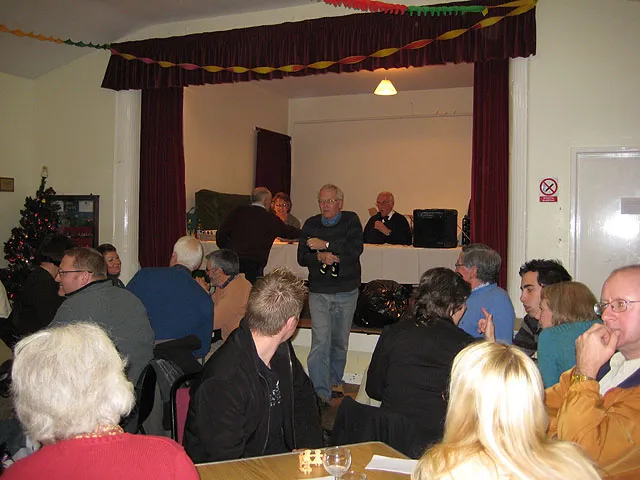
Photo: Pauline Eccles, CC BY-SA 2.0, via Wikimedia Commons
There is a particular smell to a village hall on quiz night. Floor polish, instant coffee and the faint ghost of a Christmas fete. By half past seven, the chairs are scraped into teams of six, the raffle tickets are being folded into a pint glass and someone is arguing, very politely, about whether the picture round really was a picture of a marmot.
Welcome to the Chelmsford quiz-night winter. From Great Baddow to Writtle, Broomfield to Galleywood, the humble village-hall and school-PTA quiz has quietly become one of the most reliable nights out on the local calendar. It is not glamorous. It is not expensive. And somehow it is exactly what a cold Thursday in November needs.
Why the quiz has had a quiet glow-up
Part of it is cost. A ticket is usually pocket change, the bar is often a fridge full of cans and the raffle prizes tend to be a hamper, a bottle of something and a voucher for a haircut. Part of it is company. You do not need to organise a big group, book a restaurant or find a reason to talk to the parents you only ever nod at by the school gate. You just need to turn up, sit down and be prepared to guess.
School PTAs have leaned into it too. A quiz night in the hall can raise a few hundred pounds, fill a gap in the spring-term fundraising and give grown-ups a reason to be in the building without a clipboard. The result is a packed calendar: church halls, sports clubs, scout huts, community centres and the occasional classroom with the tables pushed back.
The anatomy of a Chelmsford quiz night
Most follow a familiar rhythm. Doors at seven, kick-off at half seven, eight rounds with a break for the raffle. There is usually a picture round, a music round and at least one category that makes everyone groan in a fond sort of way — famous bridges, crisps of the 1990s, Chelmsford streets from above.
The quizmaster is the engine. Some are retired teachers with a filing cabinet of questions. Some are parents who volunteered in September and are now unexpectedly three quizzes deep. The best ones have a favourite tie-breaker and are not afraid to use it. They also know that a good quiz should be won by a team that has had to think, not by a team that happens to know the capital of Mongolia and nothing else.
Half-time is where the real local business happens. Raffle tickets, a refill of squash, a quiet debrief by the tea urn. Someone produces a bag of Minstrels. Someone else admits they have been carrying a lucky mascot in their coat pocket since the summer fete.
Finding a table without the awkward hover
This is the bit that stops newcomers. You do not need to be invited to a quiz night, but it helps to know where the notices live. School newsletters, the parish magazine, the community noticeboard by the Co-op, the local Facebook group with the slightly chaotic admin. Look for phrases like "team of four looking for two more" or "all welcome, just turn up".
Going as a pair is often easiest. You will be adopted. Chelmsford quiz teams are generally friendly and slightly desperate for anyone who might know a thing about football or 1980s television. If you are on your own, say so at the door. The quizmaster will find you a chair and, within twenty minutes, you will know three new people and the name of someone's dog.
Do not worry about being the weakest link. Every team needs a person who is good at guessing and a person who is good at writing neatly. If you can do either, you are in.
The unwritten rulebook
There are rules, but they are the sort nobody writes down. Phones stay in bags. Answers are whispered. You do not shout out the answer to another team's question, even if it is killing you. You buy at least one raffle ticket. You bring cash, because the card machine is either broken or has never existed.
Team names should be playful rather than pointed. "The Quizzy Rascals" is fine. "We Beat the Headteacher" is asking for trouble. Do not touch another team's mascot without permission. Do not argue with the quizmaster about the answer to a question unless it is the tie-breaker, and even then, keep it light. The quiz is not the place for a legal challenge.
One more thing: if you win, you are expected to be gracious. If you lose, you are expected to be gracious too. The raffle is the great leveller.
The tie-breaker economy
Here is where local quizzes get deliciously strange. Some charge fifty pence a point for the charity pot. Some run a sweepstake on the final score. The tie-breaker questions are the stuff of legend: how many traffic lights between Broomfield and Moulsham? How many bricks in a wall nobody has ever counted? What is the length of the queue at the recycling centre on a Saturday morning?
Quizmasters guard their favourites like recipes. If you are new, do not ask what the tie-breaker will be. Just accept that it will be slightly unfair and entirely Chelmsford.
What to bring
Cash. A working pen. Reading glasses, if you are of that age. A layer, because village halls are either freezing or tropically warm with no middle setting. A sense of humour. Maybe a small lucky mascot of your own — a plastic flamingo, a ceramic frog, a keyring that has seen better days. It does not need to make sense. That is rather the point.
Why it works
A quiz night is a low-stakes way to be a neighbour. You do not have to commit to a committee or sign up for a rota. You just have to turn up, share a table and discover that the person you have been nodding at for three years is alarmingly good at naming 1970s sweets.
By ten o'clock, the chairs are stacked, the urn is cooling and someone is still trying to work out how many points they lost by. You walk home with a slightly sore throat, a raffle prize you did not need and the quiet feeling that winter in Chelmsford is better with a quiz sheet in front of you.